Frequently Asked Questions
Where is Wabash Indiana?
Wabash, Indiana, is located in the northeastern part of the state, approximately 90 miles north of Indianapolis. It is situated along the Wabash River and is known for its rich history and vibrant community.
How does the Wabash Cannonball relate to history?
The Wabash Cannonball is historically significant as a folk song that celebrates the American railroad era, symbolizing the expansion and cultural impact of railroads in the United States during the 19th century.
What is the significance of Wabash County?
The significance of Wabash County lies in its rich history, vibrant community, and economic contributions, serving as a hub for agriculture, industry, and cultural activities that enhance the quality of life for its residents and visitors.
What attractions are in Wabash Indiana?
Attractions in Wabash, Indiana, include the Wabash County Historical Museum, the Eagles Theatre, and the Charley Creek Gardens, offering a blend of history, culture, and natural beauty for visitors to enjoy.
What is the history of Wabash Indiana?
The history of Wabash, Indiana, is rich and diverse, beginning as a trading post in the early 19th century and becoming the first electrically lighted city in the world in 1880, showcasing its innovative spirit.
What is the population of Wabash Indiana?
The population of Wabash, Indiana, is approximately 10,000 residents. This figure reflects the community's size and demographic within the state.
What landmarks are in Wabash County?
The landmarks in Wabash County include the historic Wabash County Courthouse, the Wabash River, and the iconic Wabash Cannonball, a popular trail for outdoor enthusiasts. These sites highlight the area's rich history and natural beauty.
How does Wabash Indiana celebrate its heritage?
Wabash, Indiana celebrates its heritage through various community events, historical landmarks, and local festivals that highlight its rich history and cultural significance, fostering a sense of pride and connection among residents and visitors alike.
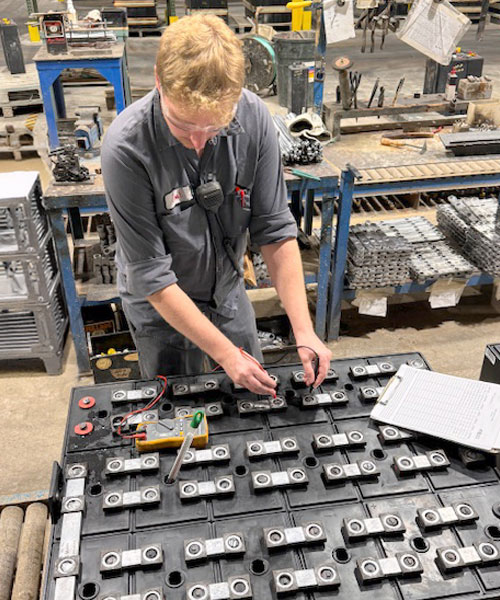
What is a lead-acid forklift battery?
A lead-acid forklift battery is a rechargeable battery used to power electric forklifts, typically consisting of lead plates immersed in sulfuric acid.
It’s the traditional technology for many material-handling operations because of its proven reliability.
How long will a lead-acid forklift battery last?
Under proper maintenance and single-shift use, a lead-acid battery may last approximately 3-5 years or about 1,200 to 1,500 charge cycles. Usage conditions (multi-shift, heavy load, temperature, maintenance) will affect this.
How long does it take to charge a lead-acid battery?
For a conventional charge: around 8 hours to reach full charge, followed by a cooling period before re-use.
What maintenance does a lead-acid battery require?
Key maintenance tasks include:
Regular watering with distilled or de-ionized water so cells remain covered by electrolyte.
Cleaning terminals and connectors to avoid corrosion.
Equalization charging at regular intervals to balance cell voltages and avoid stratification.
Monitoring electrolyte levels, checking for leaks, and confirming the battery is fully charged before topping off water.
Lead-acid vs lithium-ion — which is better?
Lead-acid batteries still have advantages: lower upfront cost, well-known technology, widely supported.
While lithium-ion batteries offer faster charging, lower maintenance, longer lifespan — this comes at a significantly higher upfront cost, and lithium introduces sever safety risks for Forklifts based on the proper weight distribution, and severe fire risks.